Regenerative
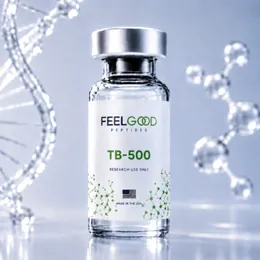
TB-500
$65.00$80.00
View
Age & purpose verification
PeptideSeed supplies research compounds for in-vitro laboratory use only. By entering this site you confirm:
Research use only. Not for human or veterinary consumption. Full terms of supply
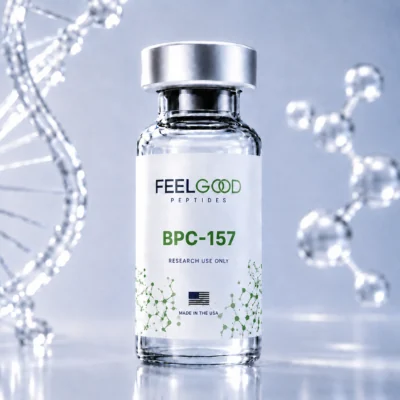
BPC-157 is a synthetic 15-amino-acid sequence derived from a partial sequence of Body Protection Compound, a peptide originally isolated from human gastric juice. It is supplied as a lyophilized acetate salt and is one of the most widely referenced peptides in in-vitro laboratory work.
BPC-157 is a synthetic 15-amino-acid sequence derived from a partial sequence of Body Protection Compound, a peptide originally isolated from human gastric juice. It is supplied as a lyophilized acetate salt and is one of the most widely referenced peptides in in-vitro laboratory work.
The sequence is notably stable in aqueous solution relative to many peptides of comparable length, which is one reason it appears frequently in bench protocols where extended incubation is required. It carries no cysteine residues and forms no disulfide bridges, so it does not require reducing conditions during handling.
PeptideSeed is working with its supplier to obtain a genuine reverse-phase HPLC purity report and LAL bacterial endotoxin assay for each released lot; per-lot certificates are not yet available and will be published against the lot number once they exist.
| Compound name | BPC-157 |
| Classification | Regenerative research compound |
| CAS number | 137525-51-0 |
| Molecular formula | C62H98N16O22 |
| Molecular weight | 1419.53 g/mol |
| Sequence | Gly-Glu-Pro-Pro-Pro-Gly-Lys-Pro-Ala-Asp-Asp-Ala-Gly-Leu-Val |
| Purity (this lot) | Pending — per-lot certificate not yet available |
| Endotoxin (this lot) | Pending — per-lot certificate not yet available |
| Appearance | White to off-white lyophilized powder |
| Vial size | 5 mg / 10 mg |
| Solubility | Soluble in sterile or bacteriostatic water; sparingly soluble in ethanol |
| Storage | Lyophilized: -20 C, desiccated, protected from light. Reconstituted: 2-8 C, use within 30 days. |
| Released lot | PS-4471902 |
Vials arrive lyophilized and sealed under nitrogen. Bring the vial fully to room temperature before breaking the seal — opening a cold vial condenses atmospheric moisture onto the cake.
Direct diluent gently against the inside wall of the vial rather than onto the cake, and allow the material to dissolve without agitation. Vortexing shears longer sequences and introduces air.
Lyophilized: -20 C, desiccated, protected from light. Reconstituted: 2-8 C, use within 30 days.
A full walkthrough is in the reconstitution guide, and the calculator will work out concentration and draw volume for this vial size.
Standard laboratory practice applies: appropriate personal protective equipment, no consumption, no administration to humans or animals, and disposal in accordance with institutional protocol and local regulation.
Per-lot laboratory certificate: pending. A reverse-phase HPLC purity report, an LAL bacterial endotoxin assay and a mass-spec identity confirmation for lot PS-4471902 have not been generated or published. PeptideSeed is working directly with its supplier to obtain genuine per-lot documentation and will publish it here, tied to this exact lot number, once it exists. New to reading these? See how to read a certificate of analysis.
Only the quantity of lyophilized material. Both are drawn from the same released lot and carry the same certificate; the 10 mg vial is the lower cost per milligram.
Sterile water and bacteriostatic water are both commonly used in published bench protocols. Acetic acid is not required for this sequence.
Held at 2-8 C and protected from light, laboratory handling guidance generally treats reconstituted solutions as usable for about 30 days. Freeze-thaw cycling should be avoided.
BPC-157 is supplied for in-vitro laboratory research only. It is not a drug, dietary supplement, food or cosmetic, is not approved by the FDA for any use in humans or animals, and no dosing guidance is published for it. Nothing on this page is a therapeutic, structure–function or health claim. Purchasers must be 21 or over and are responsible for compliance with all applicable law. Full terms of supply.